How much does a new roof cost? Nationally, This Old House puts the average cost of a new roof at about $15,439, based on a 2,000-square-foot asphalt shingle roof. About half of the 1,000 homeowners in its 2026 survey paid between $5,001 and $20,000. Those are national figures. They are not our prices, and they are not a quote for your house.
The price of your roof comes down mostly to five things: how big it is, how steep it is, how many old layers come off, how many of the boards underneath need replacing, and whether you choose shingles or metal. On an older Scranton house, most of them lean toward more work, not less. The way to turn them into a real number is to have the roof measured and looked at up close. We do that for free, and you get the full price before any work starts.
How roofers price a roof: squares, pitch and layers
Roofing is measured in squares. A square is 100 square feet of roof, and it is the unit shingle makers price by, as Consumer Reports explains in its roofing guide. What counts is the surface of the roof itself, which is rarely the same as the floor space of the house. In the Consumer Reports example, a one-story, 2,300-square-foot house with a medium-pitched roof needs about 30 squares, or 3,000 square feet of roofing, once waste and a few spare shingles are counted. So a cost per square foot of house, or a figure for a 1,200-square-foot home, is only a rough guess until somebody measures the roof.
From there, the price of each square moves with the roof:
- Pitch. Pitch is how steep the roof is. A steep roof has more surface over the same rooms, and it is slower, more careful work. This Old House notes that a roof costs more when it is steep or more than two stories up.
- Shape. Every valley, where two slopes meet, and every dormer and chimney means more cutting, more flashing and more waste. A technical expert at the National Roofing Contractors Association told This Old House that a roof with many slopes meeting at angles makes more waste and takes more labor.
- Layers. Every old layer has to be torn off and hauled away. Two or three layers means that much more to strip.
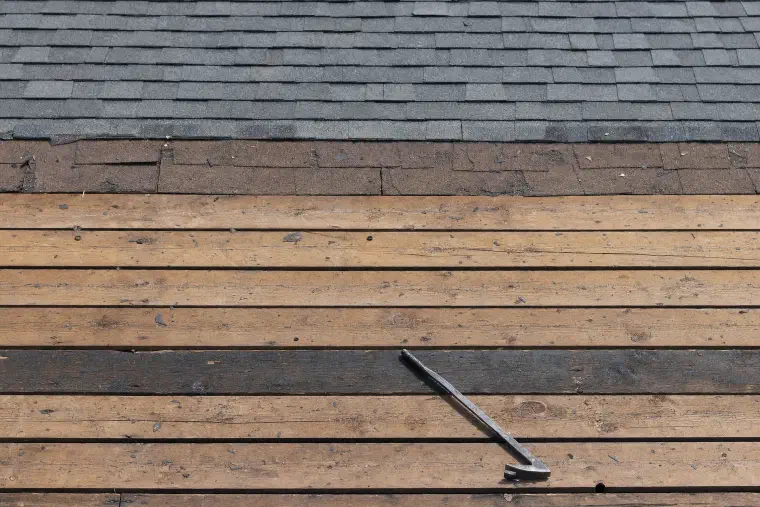
- Boards. Any rotted boards found under the old shingles have to be replaced before anything new goes on.
- Material. Shingles cost less up front than metal. More on that below.
When This Old House asked homeowners what drove the cost of their new roof, labor came first, ahead of materials. That is why the things that make a roof slow to strip and slow to cover are the things that raise the price.
Why older Scranton roofs can cost more
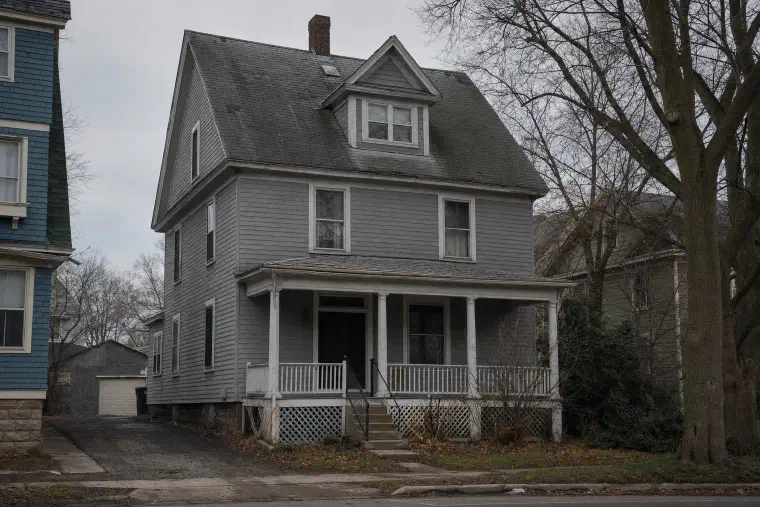
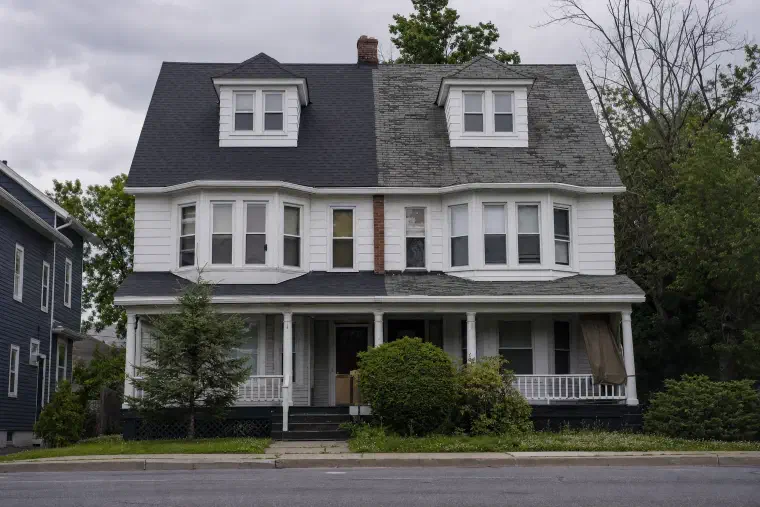
Much of Scranton was built in the late 1800s and early 1900s, and those roofs tend to stack several of the costs above on one house:
- Steep pitches. More roof to cover, and slower going on every square.
- Dormers. Each one adds short walls and joints to flash, and a lot of small cuts.
- A chimney in the middle of the roof. It needs flashing all the way around, and an open roof is the right time to fix a cracked chimney top or crumbling mortar.
- Wide boards instead of plywood. Old plank decking can hide soft spots that only show once the shingles are off.
- Two or three layers of old shingles. Many of these roofs have been covered over before, so there is more to tear off.
We check the boards from the attic before we quote. Anything we cannot see until the old shingles are off, we photograph and show you before we fix it, and any extra work is priced and agreed before it goes ahead.
Double blocks are their own case. Two homes share one roof and a center wall, so your half of the roof meets the other half along a seam. We can quote your side alone, or both sides if you and your neighbor would rather do the job once. Doing both at once means the seam down the middle is done one way, at one time, and each owner still gets a clear price for their half. Where one half was reroofed years ago, the line where old meets new is where water tends to find a way in, something we look at closely on doubles in Nanticoke and across the valley.
The street matters too. On the tight city lots of Wilkes-Barre, old shingles have to come off without landing on the next roof, a parked car or a garden, and the truck may have to wait on the street. Up on the mountain in Hazleton, wind and snow call for extra care at the edges and the ridge. An online roof cost calculator cannot see any of this. Even the one in the This Old House guide warns that roof pitch, labor and the features of each home will move its estimate.
Shingles or metal: the price now and over the years
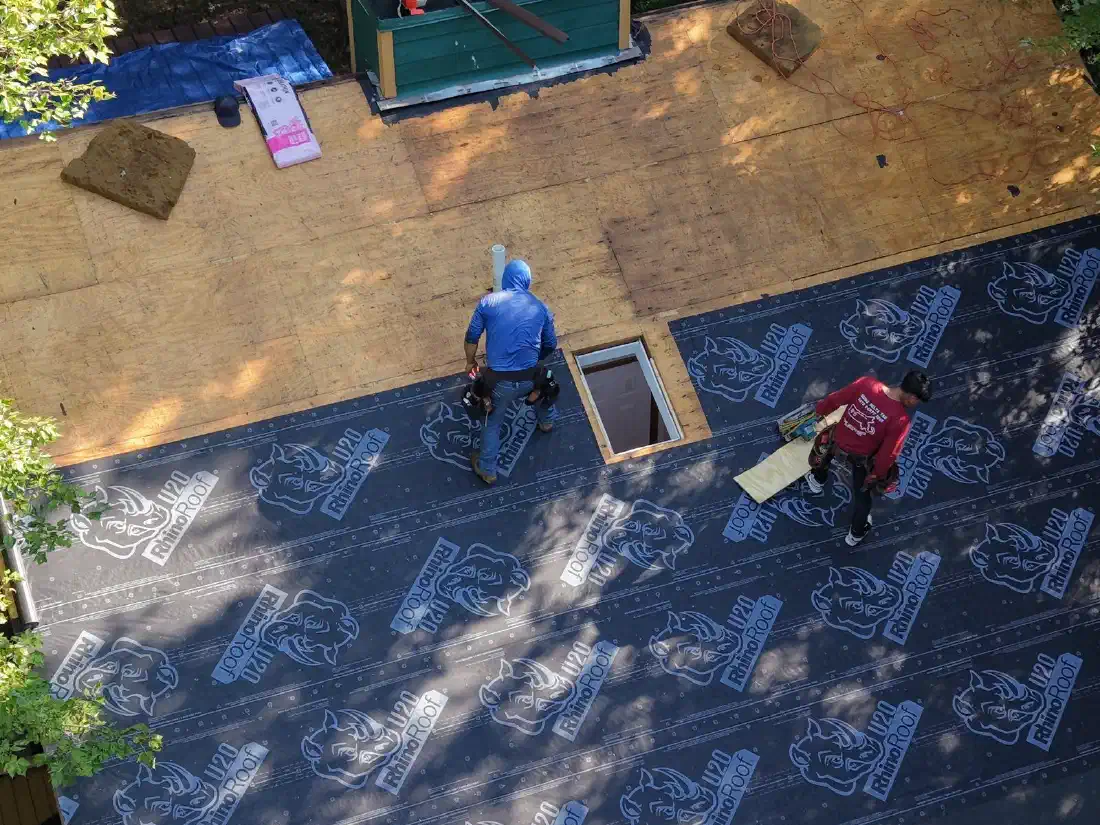
Asphalt shingles cost less at the start, and they suit almost any roof shape. We put on Owens Corning shingles over RhinoRoof synthetic underlayment. The shingle line you pick moves the price as well, so we explain the difference between the lines in plain terms, and you know what you are paying for.
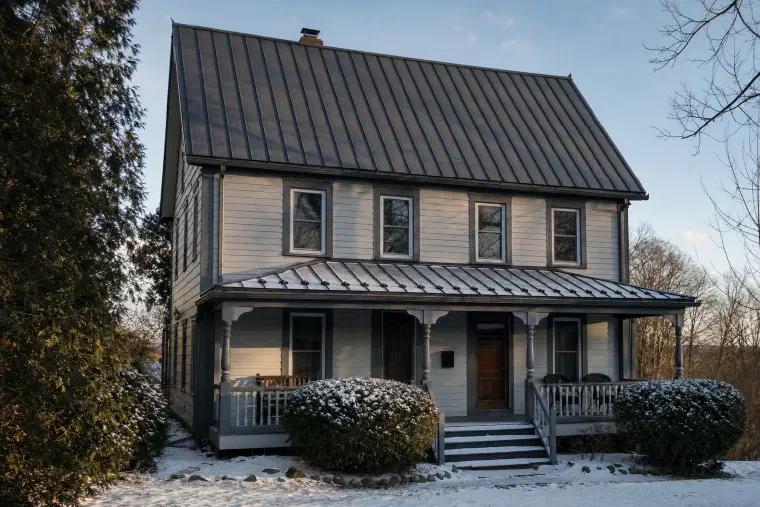
Metal costs more to buy and put on, and it usually lasts longer and needs less upkeep. On a steep roof it lets heavy, wet snow slide off instead of sitting there for weeks. That snow has to land somewhere, so a metal roof should come with snow guards above doors, walkways and the driveway, which Consumer Reports also suggests for cold climates. Standing seam metal hides its fasteners under raised seams, so there are no screw heads through the face of the roof to work loose. That is why it costs more than screw-down metal panels.
The fair way to compare the two is the price against the years you plan to stay. If you expect to sell in a few years, shingles usually make more sense. If this is the house you mean to keep, the higher price of metal buys a roof that usually lasts longer. We can quote both on your roof, side by side, so you can see the real difference.
The parts of a roof quote people forget
Two quotes can both say new roof and still be for different jobs. These lines are where they usually differ, and each one is on the list of hidden costs in the This Old House guide.
| On the quote | What to look for |
|---|---|
| Deck boards | A price for each rotted board or sheet, and how many are included |
| Flashing | New metal at the chimney, the walls and the vents |
| Attic venting | Vents along the peak and under the eaves, or a reason the roof does not need them |
| Bottom edge | A waterproof layer along the edge, where ice builds up in winter |
| Gutters | Whether they come down and go back up, or get replaced |
| Permit | Whether your town needs one, and whether the price includes it |
| Haul-away | Who takes the old layers away, and the cleanup of loose nails |
Deck boards are the line that moves most on an older house, because nobody can see every board until the shingles are off. Flashing is the metal that seals the joints at chimneys, walls and vents. A new roof over old, rusted flashing can leak in the same places the old one did, so we put in new flashing as part of the job. Venting is easiest to put right during a new roof, because the ridge is open and the deck is bare; our page on attic venting explains how it works. Gutters sometimes have to come off while the roof edge is redone, and if yours are near the end of their life, it is worth pricing new gutters at the same time. Permits, This Old House points out, are usually an add-on that does not show up in the first estimate, so look for them in the contract.
When a repair is the cheaper answer
Not every worn roof needs replacing. A single leak, a few missing shingles, a cracked seal around a vent pipe or worn flashing at the chimney is a repair, and it costs far less than a new roof. When the problem is in one area and the rest of the roof is sound, patching it is the sensible choice.
A new roof starts to make sense when the shingles are worn out everywhere, not just in one spot: curled edges across whole sides, grit washing into the gutters, leaks that come back after they were fixed, and soft boards in several places. We tell you honestly which one your roof needs, and if a roof repair will do the job for now, we quote the repair instead.
How to read a roofing quote
A good quote reads like a list of the work, not one number at the bottom. Consumer Reports suggests asking for a breakdown: a price for the shingles, a price for the labor to strip the old roof and put on the new one, and a backup amount for any rotted decking the roofer finds. With that in hand, you can compare two quotes line by line instead of guessing why one is higher.
Then check the paperwork, because Pennsylvania has its own rules. Most home improvement contractors here must register with the Attorney General, and the law requires the registration number on their ads and contracts. It starts with PA, like ours: PA214278. You can look up any contractor on the Attorney General website or by calling 1-888-520-6680. The same page is clear that registration is not a stamp of approval on how honest a contractor is or how good the work is, so ask for references too.
The contract itself is covered by the Home Improvement Consumer Protection Act. A questions page from the Attorney General puts it this way:
The act also requires all contracts for home improvements of more than $500 to be in writing and be signed by the consumer and the contractor. These contracts must also include important provisions like a description of the work; an approximate start date and completion date; the total price of the contract; and notice of the consumer's right to cancel the contract.
On deposits, the same page says:
Generally speaking a down payment of one-third of the total contract price or one-third plus the cost of special ordering materials is appropriate.
The law sets that limit for jobs with a total price over $5,000. It does not say how the rest is paid; the page suggests payments as the work goes, with the last one when it is finished. The Pennsylvania Insurance Department adds two plain rules: do not sign paperwork with blank sections, and do not pay a contractor in full or sign that the work is complete until it is.
Be careful with a roofer who:
- will not give you a PA registration number
- asks for a bigger deposit than the Attorney General describes
- wants you to sign a contract with blank spaces
- wants to be paid in full before the job is done
- knocks on your door after a storm, which the Insurance Department also warns about
Does insurance pay for a new roof?
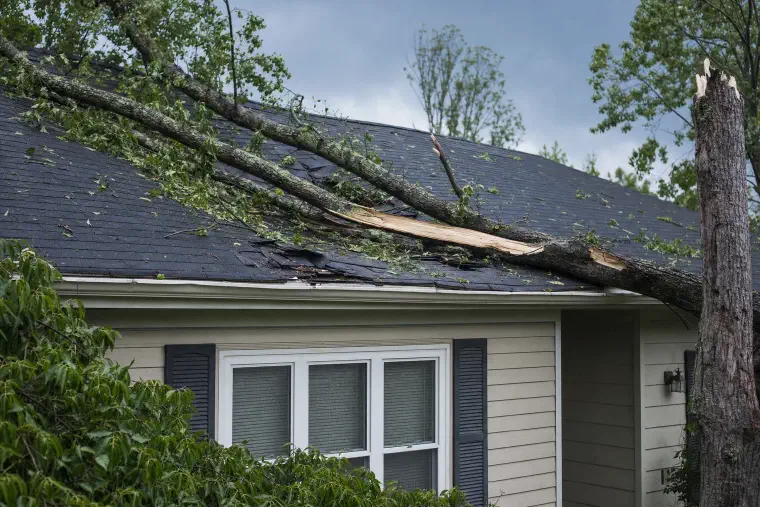
Sometimes, when something sudden damaged it, such as a falling limb or a windstorm, and usually not when the roof is simply worn out. The Pennsylvania Insurance Department homeowners insurance guide lists wear and tear among the things most homeowners policies do not cover. Your own policy decides it, so talk to your insurer before you count on a payout.
If a storm does damage the roof, the same guide says to photograph the damage before you clean up, make only the repairs needed to stop more damage, and hold off on permanent repairs until your insurer has inspected and approved them. We can tarp the roof to keep the water out, and give you our photos and the quote to send to your insurer.
Questions homeowners ask
Is $30,000 too much for a roof?
Not necessarily, and the total alone cannot tell you. Nationally, about half of the homeowners This Old House surveyed paid between $5,001 and $20,000, so $30,000 is above that range. A large, steep roof with dormers, several old layers, a lot of rotted boards, or metal instead of shingles can honestly cost that much. Judge it by what it lists: the squares, the layers coming off, a price for deck boards, the flashing, the venting, the cleanup and the material by brand and line. Then compare it with another quote for the same work, because, as Consumer Reports notes, roof replacement costs can vary widely even when the exact same shingles are going on.
What is the cheapest way to replace a roof?
The lowest price on the day is usually new shingles laid over one old layer, where your town allows it. Consumer Reports says that saves money over a tear-off, but that you might not be allowed to add another layer if two are already on, and many older Scranton roofs have two or three. Our new roofs start with a full tear-off, down to the boards, so nothing new goes on over a hidden problem. Better ways to spend less: choose a standard shingle line over a premium one, fix what a repair can fix, and ask whether only one side of the roof needs replacing. Plan the roof before it leaks, too, so you are not also paying for a tarp and a stained ceiling.
Is metal or shingles cheaper?
Shingles, at the start. Metal costs more to buy and put on, but it usually lasts longer and needs less upkeep, so the longer you stay in the house, the better its price looks.
Can a metal roof go over shingles?
Some metal roofing systems can, but This Old House notes that a full tear-off is often recommended to make sure the roof structure is sound. We take everything off first, the same as we do for shingles. On an older roof with two or three layers, or plank boards that may hide soft spots, the boards need to be seen before anything new goes on.
Should a 20-year-old roof be replaced?
Not just because of its age. Age tells you where to look, but condition decides it. A 20-year-old roof with flat, well-sealed shingles and a solid deck may have years left, while a younger roof that was put on poorly can fail early. The signs that it is time can often be seen from the yard: shingles curled or cracked across a whole side, grit piling up in the gutters, leaks in more than one place, or a roofline that dips between the rafters.
What is the best time of year to replace a roof?
Late spring through fall is easiest, because shingles need warm sun to seal down to each other. We can still replace a roof in cooler weather with extra care, such as sealing the shingles by hand. What we avoid is opening a roof with snow or a long stretch of rain on the way. The best time to get the quote is before the roof starts leaking, so you choose the timing instead of the weather.
Get a price for your own roof
A national average tells you the ballpark. The size, pitch, layers and boards of your own roof tell you the price. We measure the roof and look at it for free, show you photos of what we found, marked up with arrows and notes, and give you the full price before any work starts. Read more about roof replacement, or ask for your free quote.