This is about the windows in a house, not a car. In a 2026 This Old House survey of 1,000 homeowners across the country, the average installed window cost $517, and the average project was seven windows and $7,183. A Consumer Reports buying guide gives a wider national spread: about $300 to $3,000 for one window, depending on its size and type.
Those are national figures. They are not Scranton prices, and they are not ours. Four things move the price of your windows: whether each one goes into the old frame or replaces the frame too; its size, style and glass; the trim around it; and what an older house is hiding behind the old window.
The only way to a real number is to measure every opening. We do that for free, and you know the price before anything is ordered. Our window replacement page shows how the work is done.
Insert or full-frame: the biggest difference in price
There are two ways to replace a window, and they are priced differently.
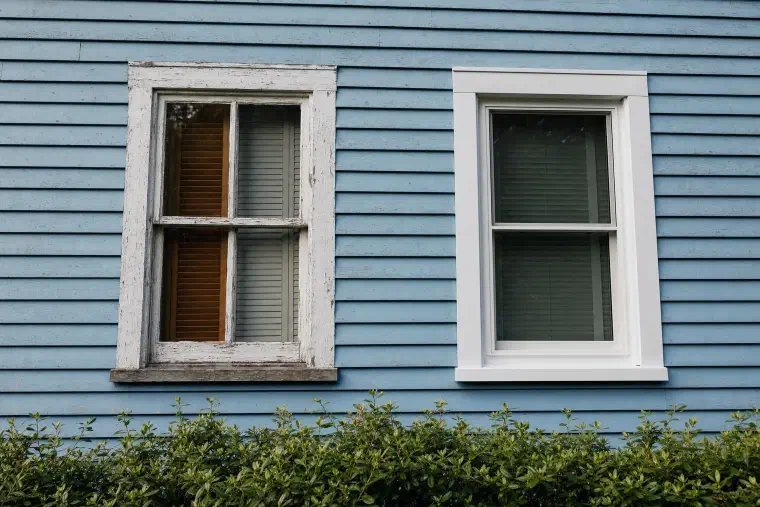
An insert window, sometimes called a pocket window, fits inside the old frame. The old sashes come out, the frame stays in the wall, and the trim inside and out is left alone. That works when the frame is sound.
A full-frame replacement takes everything out, down to the framing, and the new window starts from the bare opening. It is the right call when the frame is rotted or the opening is badly out of square. As This Old House explains, full-frame is often necessary when the frame has rot, warping or structural damage, and opening the wall up also shows water damage or poor insulation that an insert would leave hidden.
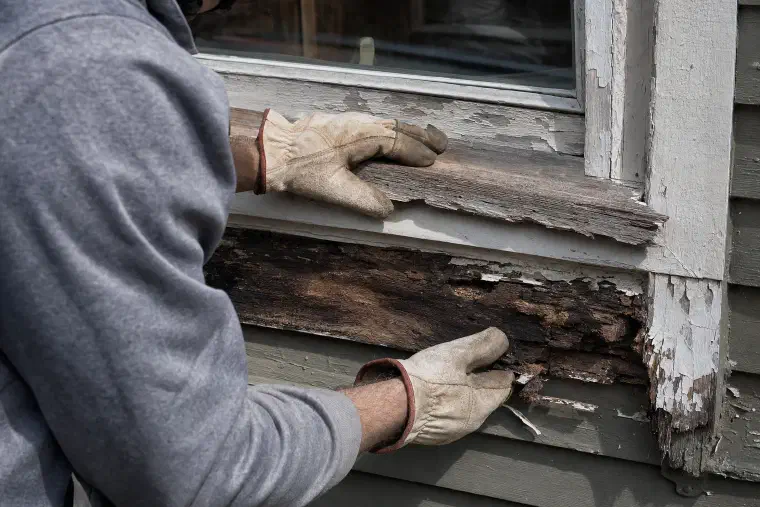
Full-frame costs more because there is more to take out and more to put back. Consumer Reports calls these new-construction windows and says they usually cost more to install than the pocket type, because the whole old window comes out with its frame, sill and trim. For a sense of the labor on its own, the same guide puts installation at about $100 to $300 per window nationally.
Inserts have one cost that is not on the bill: the new frame sits inside the old one, so the glass gets a little smaller. On older houses, like the ones along Main Street in Conyngham, we fit new windows to the openings rather than shrinking the openings.
One house can need both kinds. We tell you which one each window needs, and why, before you get a price.
Size, style and glass
Bigger windows cost more. The common styles are:
- Double-hung, where both the top and the bottom sash slide. Most older houses here have them, and new ones tilt in so you can wash the outside glass from inside the room.
- Casement, which cranks open. It suits a spot over a sink that is hard to reach across.
- Slider, which fits a wide, short opening.
- Picture window, which does not open at all.
In the This Old House survey, the average for eight common styles fell between $474 and $551 a window, so the style moved the price less than the glass and the frame did:
| Choice | National average per window |
|---|---|
| Double-pane glass | $529 |
| Triple-pane glass | $609 |
| Vinyl frame | $472 |
| Composite frame | $513 |
| Wood frame | $544 |
| Fiberglass frame | $564 |
These are what homeowners across the country reported paying in 2026, not Scranton prices.
Double-pane glass is the standard. Consumer Reports describes it as two panes with a sealed space between them, usually filled with argon gas, which slows heat through the window. A clear low-E coating on the glass reflects heat while letting light in. Triple-pane adds a third pane. Consumer Reports says it cuts noise a lot and saves some energy, but not enough to justify the cost except in extremely cold places or loud spots near an airport or a major highway.
For a cold winter, read the label on the glass. On the Energy Star map, Scranton and the rest of Lackawanna County are in the Northern zone, where a certified window needs a U-factor of 0.22 or lower and a solar heat gain number of at least 0.17. Energy Star says to look for its label for your zone next to the rating sticker on the glass. The two numbers to read:
- U-factor tells you how well the window holds heat in. The lower the U-factor, the better the window insulates, which is what you want through a January here.
- Solar heat gain tells you how much heat from sunlight comes through the glass. The lower the number, the more of it is blocked. Energy Star says that in colder places, the ideal window for a south-facing wall has a higher solar heat gain and a low U-factor, to cut heat loss.
What older Scranton houses add
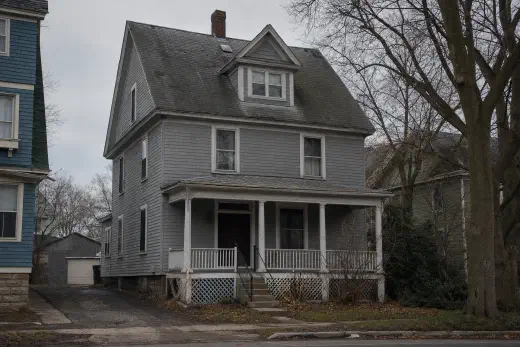
Much of Scranton was built in the late 1800s and early 1900s, and a window job in a house that old has steps a newer house does not. This Old House has one piece of advice for the whole Northeast: focus on insulation and air sealing, since cold winters make drafts and heat loss more noticeable. In an old house, that starts in places you cannot see.
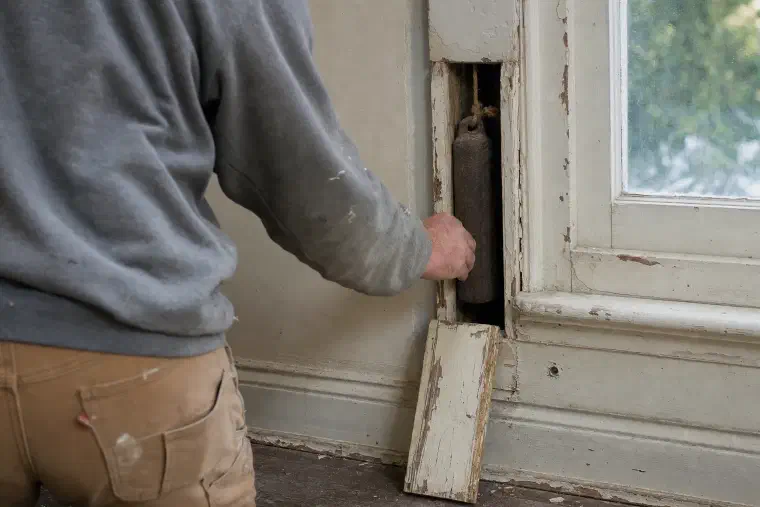
Empty sash-weight pockets. The original windows in many of these houses hang on ropes and iron weights hidden in the wall beside the frame. When those windows come out, the empty pockets are a straight path for cold air, so we fill them with insulation. Around every new window, the gap between the frame and the wall gets low-expansion foam, which seals without bowing the frame, and flashing tape at the sill sends any water back outside.
Openings that are not square. A century of settling leaves walls that are no longer flat or square, and the window openings move with them. No two openings in an older house are quite the same size, so we measure each one and order every window to fit. The new window is set level and square even when the opening around it is not, and an opening that is badly out of square is one of the reasons a window needs full-frame.
Rotted sills. Water gets into cracks in old paint, freezes and pushes the paint off the wood, which is why window sills are among the first things to peel here. Once the paint is gone, water soaks into the bare wood and it can go soft, and replacing soft wood adds to the price of that window.
Trim capped in aluminum. Capping means bending aluminum to fit the wood trim and sill around a window, then fastening and sealing it in place. The wood underneath no longer sees rain or sun, so it does not rot, and the trim never needs paint again. It adds to the price of each window, and it ends the scraping and painting. Capping over rotted wood only hides the problem, so any soft trim is replaced first. If you would rather keep painted wood trim, our painting page covers the scraping and priming it needs.
Old paint. Houses built before 1978 can have lead paint on the old sashes, sills and trim. Federal rules always cover window replacement in those houses, however small the job, and the EPA recommends hiring a contractor certified in lead-safe work. Ask how it will be handled in any quote for an older house.
All at once or a few at a time?
The homeowners in the This Old House survey replaced seven windows per project on average, and the guide notes that doing several at once can lower the cost per window if the installer offers a package or volume price. So ask for the price both ways: the whole house, and just the windows that need it most.
Doing them all at once means one round of measuring and ordering, windows that match, and the trim capped in one go. Doing a few at a time spreads the cost. If you go that way, start with the windows that are fogged, drafty or sitting on soft sills, and keep the brand and model from the first quote so the later windows match.
Windows and siding often make sense together, because the trim around every window gets redone either way. On houses from the middle and later 1900s, like many around Clarks Summit, the windows and the siding can be due at about the same time. We can quote windows and siding installation together or separately, so you can compare and decide.
Fix the glass or replace the window?
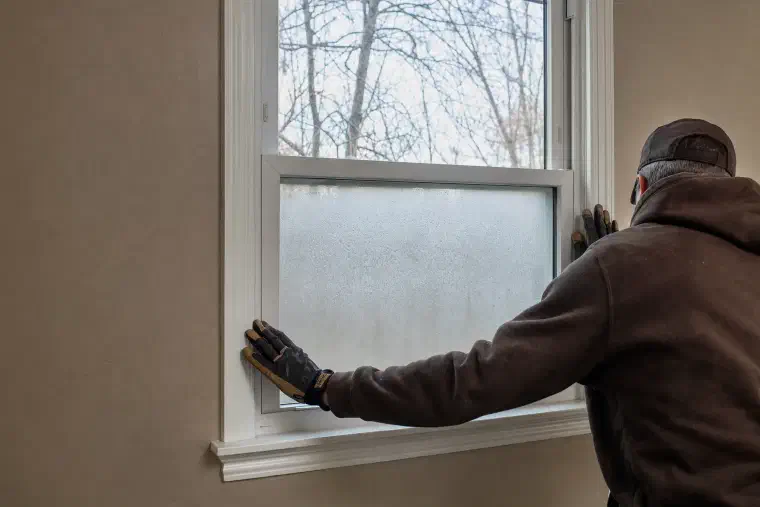
Fog or droplets between the two panes mean the seal around the glass has failed. As This Old House describes it, the gas between the panes escapes, outside air gets in, and moisture forms inside the sealed glass.
The same article says fog on its own does not hurt how the window works very much, unless the glass has a soft low-E coating, but it does not go away. A defogging service drills into the glass to clean it, but it does not fix the seal or put the gas back, so the window does not insulate the way it did.
The lasting fixes are new glass or a new window. On a modern double-pane window, the whole sealed glass unit gets replaced, not a single pane, and replacing the glass is often cheaper than replacing the window, especially when the frame is still in good shape. When a window keeps losing its seal, lets in drafts or is breaking down, This Old House says a new window may be the better long-term choice.
Before you pay for either, check the warranty. Consumer Reports says a typical replacement window warranty lasts 10 years, and some run 20 years or promise a lifetime.
If one or two windows in a house of sound ones are fogged, ask about new glass first. If several are fogging and the sashes also stick or the sills are soft, the glass is not the only thing that has worn out.
Signs your windows are due, and how long windows last
The signs are the same ones on our window replacement page:
- fog or droplets trapped between the two panes of glass
- frost forming on the inside of the glass in winter
- sashes that stick, slam down or will not lock
- a draft you can feel with your hand near the frame
- soft or rotted wood on the sill or the outside trim
One note on frost: Energy Star says even its certified windows can get condensation in cold weather, so a little on the coldest mornings does not prove a window is failing. Frost along with a draft or a soft sill is a stronger reason to have it looked at.
Sashes that stick can come from a worn frame, worn parts or a house that has shifted, and This Old House says all three may mean new windows.
How long windows last depends on the frame material, the upkeep, the climate and how well they were put in. This Old House gives these ranges: wood and aluminum 15 to 30 years, vinyl 20 to 40 years, and fiberglass 30 to 50 years.
Age alone does not settle it. This Old House says repair usually costs less for a single problem, like worn weatherstripping or broken hardware, and replacement is the better long-term choice for windows with widespread damage, drafts that keep coming back, poor operation or several problems at once.
Can windows be replaced in winter?
Yes. Windows can go in any time the weather lets us work. Spring and fall are the most comfortable, but winter works too, because only one opening is open at a time, and each new window is sealed before the next old one comes out, so rooms are not left open to the cold.
Is winter cheaper? That depends on the contractor, so ask. Also plan for the wait: every window is ordered to fit its own opening after we measure, so ask for an expected install date with your quote.
How to compare window quotes
The Consumer Reports guide says every bid should list the window brand and model, the number of windows, their sizes and types, any add-ons and the installation details, with labor and materials broken out separately. To compare two quotes fairly, check that each one shows:
- a price for each window, not one lump sum
- insert or full-frame, named for each opening
- whether the outside trim is capped in aluminum, and which trim
- what happens to the empty sash-weight pockets in an older house
- how rot is priced if it turns up once the old window is out
- how old paint will be handled in a house built before 1978
- who hauls away the old windows
That rot line matters. In the This Old House survey, 61% of homeowners paid about what they were quoted, but 27% paid more, and 14% named unexpected costs as a problem. When we find soft wood, we show you what we found and what it takes, and nothing extra starts until you say yes.
In Pennsylvania, the Attorney General says every home improvement contract must be in writing and signed by you and the contractor, with the total price, the estimated start and finish dates and a description of the work. The contractor registration number, the HIC number, has to be on its ads, estimates and contracts, and you must be given a written notice of your right to cancel. Ours is PA HIC #PA214278, and you can check any registration number with the state.
For the windows themselves, Consumer Reports rates replacement windows by brand and model after lab tests of double-hung windows against wind at 0 and 70 degrees and against wind-driven rain. The full scores are for its members. When This Old House asked homeowners what they would tell others, many said to shop around and get more than one quote.
Questions homeowners ask
Should 20-year-old windows be replaced?
Not because of their age alone. This Old House puts the life of vinyl windows at 20 to 40 years and wood at 15 to 30, so a 20-year-old window may have years left or may be done. Look for the signs above. One of them alone may only need a repair, like new weatherstripping or a new lock. Several at once is when replacement becomes the better long-term choice.
Can fogged double-pane windows be fixed?
Partly. A defogging service can clean the glass, but it does not repair the failed seal or put back the gas. The lasting fixes are a new sealed glass unit or a new window. If the window is fairly new, check the warranty first, since the glass may still be covered.
Is it cheaper to buy windows and have someone install them?
It can look cheaper on paper, so ask three questions before you buy. Who measures? No two openings in an older house are quite the same size, and a window ordered wrong does not fit. Who pays if a window arrives the wrong size? And who do you call if it leaks: the store, the maker or the installer? Consumer Reports warns that even the best windows will not look or feel right if they are put in wrong, and Energy Star says even the best can be drafty if they are poorly installed, so how a window goes in matters as much as which window you buy. If you mean putting them in yourself, This Old House says hiring it out is typically the better value for most homeowners, even though doing it yourself saves the labor.
How long does it take to replace 20 windows?
It depends on how many are inserts and how many are full-frame, how many are upstairs, and what turns up when the old windows come out, since rot adds time. Ask for the number of days with your quote. Whatever the count, the house is not left open: each opening is closed up before we move on to the next.
Do I need a permit to replace a window?
It depends on where you live, so ask your local code office before the work starts. Scranton explains its rules for changing the windows and doors in a home on the city building permits page. Outside the city, call your borough or township office. Either way, ask your contractor who will get the permit.
What is the downside of vinyl windows?
The frames are thicker than old wood sashes, so the glass area gets a little smaller. Vinyl comes in fewer colors, and Consumer Reports notes that most vinyl frames cannot be painted or stained, so pick a color that suits the house when you order. In exchange, the frames do not rot, peel or need scraping, and in the This Old House survey vinyl frames averaged $472 a window, one of the lower prices of any frame.
A real price for your own windows
National averages tell you the range. Your price comes from your own windows, and from what the old frames are hiding. We measure every opening, tell you what each window needs and why, and give you a free quote with the price before anything is ordered.
See how the work is done on our window replacement page, or get in touch to set up a visit. Call or text us, and a photo of the worst window helps.