Drywall installation in Scranton.
New drywall for basements, additions and remodels, taken from bare studs to walls that are smooth and ready for paint. Quotes cost nothing, and the walls go up only once you say yes.
Get free quote
Licensed and insured
Registered in Pennsylvania, PA HIC #PA214278.
A crew for each trade
Roofers on your roof, gutter crews on your gutters.
Open 24/7
Call or text any hour, for an emergency or a quote.
Reviews
What neighbors say.
Recommendations from our neighbors on Nextdoor, in their own words.

We recently used Atlas for a full roof replacement and we couldn't be more thankful. … The crew worked fast, efficiently and left everything spotless when the job was done. We're already looking forward to having our gutters replaced in a few weeks. If you have a chance to work with this company I highly recommend them. Thank you again to the whole team for all your help.
T. B. Bloomsburg, PA Communication was clear from day one. They showed up on time, kept the site clean, sent photos updates and stuck to the quoted price. … Best contractor experience we've had in the area. Highly recommended
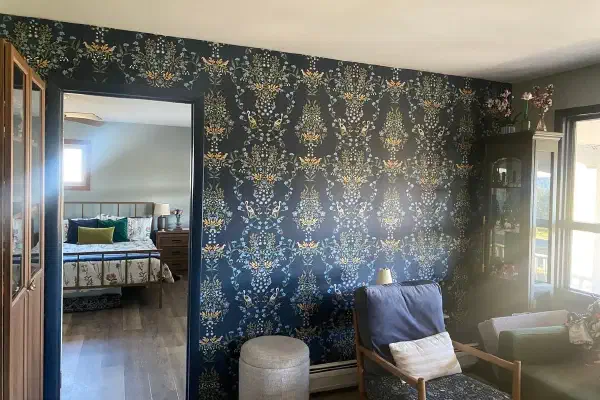
S. K. Drums, PA Their most recent job involved replacing some old wood paneling with wallpaper. They were done in a few hours and the wall looks fantastic. I can't recommend them highly enough.
R. V. Drums, PA Nice job cleaning the gutters
K. K. Drums, PA
What to look for
When a room needs new drywall.
New walls and ceilings, not patches. For holes and cracks, see drywall repair.
- A basement with bare block or stud walls you want to use
- New framing for a wall, a closet or an addition
- Walls opened up for new wiring, plumbing or insulation
- An old plaster ceiling sagging away from the lath
- A remodel that has taken a room back to the studs
- Seams and screw heads showing through the paint on past drywall work
Hanging drywall on new walls, closets and additions
Good drywall starts with how the sheets go up. We use the longest sheets that fit to keep seams few, stagger the joints so they do not line up, and drive each screw just below the surface without tearing the paper. Around windows and doors, seams land away from the corners of the opening, where cracks like to start. Outside corners get corner bead so they stay straight and take a knock without denting. Then the walls are ready for finishing.
Interior finishing: taping, mudding and sanding
Hanging the board goes quickly. The slow, careful part is interior finishing: tape bedded in joint compound over every seam, a coat over each screw head, then more thin coats, each one feathered wider than the last and sanded smooth. We check the walls with a light held low along the surface, which shows ridges and dips that look fine face on. A coat of primer follows, so paint goes on evenly. If you want, we paint the room too, so one contractor takes it from bare studs to done.
Basement drywall on older foundation walls
Basements here are often block or old stone, and plenty get damp in spring when the snow melts. Drywall against a wet wall grows mold and crumbles, so we look for signs of water first and tell you if that needs fixing before any walls go up. The board goes on framing set off the foundation, with moisture-resistant board where it makes sense and a small gap at the floor. We also leave access to shutoff valves, the electric panel and cleanouts.
Finishing a basement?
Tell us if the walls ever get wet in spring. Water has to be dealt with before drywall goes up, and we would rather say so at the quote than after the walls are closed.
Drywall ceiling installation in early 1900s homes
Ceilings are the hardest part of any drywall job, since the board is heavy overhead and has to be held tight to the joists while it is fastened. We use ceiling board that resists sagging between joists. In Scranton homes built in the early 1900s, the old plaster ceiling is often cracked and pulling away from the lath. Depending on its shape, we either take it down or fasten new drywall over it into the joists, and we explain which suits your house before work starts.
Drywall contractors who also do the remodel
Because we do the remodeling as well, drywall goes up in the right order in a kitchen, bathroom or basement: after the plumbing, wiring and insulation are in and inspected, and before the flooring and trim. Bathrooms get moisture-resistant board, and the walls around a tub or shower get cement board so tile has something solid to hold. Having one contractor for the remodel, the drywall and the paint means nobody is waiting on someone else to show up.
- Free quotes
- Licensed and insured
- PA HIC #PA214278
- Price before work starts
How it works
How it works.
Four steps, from the first call to the finished job.
Call, text or send the form
Tell us what is going on. For an emergency, call any hour.
We take a look
We see the job for ourselves and photograph what we find before we put a number on it.
You get a free quote
A clear price for the work, and nothing starts until you say yes.
We do the work
Then we walk you through the finished job before we call it done.
Why us
The one you call.
A full team behind every job, and one person you can always reach while it is done.
One person with you, start to finish
From the signed contract to registering your warranty, you always have one of us to talk to.
A crew for each trade
Every trade has its own crew, with more than ten years in that trade. One crew doing everything is how mistakes happen.
A team of more than 30
Crews, project managers and an office behind every job, not one person with a truck.
Most of our customers come back
About three in four have hired us before. Once you call us for one job, you have someone for the next.
Photos of every job
Before and after photos on your own link, added as we work. We show you the problem.
Open 24/7
Call or text any hour. The same number takes texts, so you can send a photo of the problem.
Good to know
Common questions.
How much does drywall installation cost?
It depends on how many rooms there are, how tall the ceilings are, how many corners and openings the walls have, and how smooth the finish needs to be. We measure the rooms, and the quote that follows is free, with the price settled before the first sheet goes up.
What is the process for putting up drywall?
Sheets are cut to fit and screwed to the studs and ceiling joists. Every seam is taped and covered with joint compound, then built up in thin coats and sanded between each one. Primer goes on last, and the walls are ready to paint.
Do you tape or mud first?
With paper tape, a thin bed of mud goes on first and the tape is pressed into it. Self-sticking mesh tape goes on the bare seam, then mud over it. Either way, several thin coats do a better job than one thick one.
Do I need a permit to hang drywall?
It depends on the job and on your city or township, which sets the rules. A remodel that moves walls, adds a room or changes wiring or plumbing usually needs one. Ask us when we quote, and we will go over what your job needs.
More services
You might also need.
- Home Repairs
Drywall Repair
Holes, cracks, nail pops and water-stained ceilings, patched and blended into the wall around them. Learn more - Home Repairs
Ceiling Fans
New fans hung on boxes that can hold them, and old fans fixed when they wobble, hum or stop. Learn more - Home Repairs
TV Mounting
TVs mounted into studs or solid brick, over the fireplace or on plaster, with the cables tidied away. Learn more - Home Repairs
Painting
Walls, ceilings, trim and siding, scraped, patched and primed before the paint goes on. Learn more